Interplex Junction - The Place to Connect

Automotive Design Team

Recent Posts

Charged EV article: The Future of Integrated Inverter Modules

Posted by Automotive Design Team

Mar 17, 2015 9:00:00 PM

Charged EVs magazine published a great article in their newest issue on "The Future of Integrated Inverter Modules: Press-fit solderless interconnects and smarter design".  
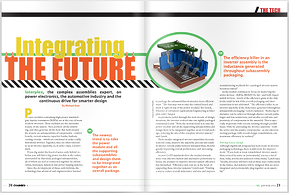
Interplex-ChargedEVs-article

The article provides an excellent overview on the driving factors in the automotive industry that are radically altering the challenges facing design engineers tasked with creating next-gen inverter modules.

With efficiency and cost the keys to success, finding a way to reduce overall inductance and inverter size while improving manufacturing methods have become critical.

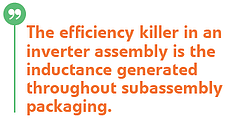
The author, Michael Kent, did extensive research on the factors impacting power efficiency and much of the article focuses on the detrimental impacts of inductance, which is the primary"efficiency killer".  
Interplex-PQ1

The article also drills down and explores how solderless press-fit interconnects and advanced packaging methods can dramatically reduce inductance problems while also making inverters easier to manufacture.

For more information, read the entire Charged EVs article here.


You might also find of interest these Tech Bulletins on related topics:


Read More

Topics: power modules

Trends Toward More Efficient Automotive Inverter Power Modules

Posted by Automotive Design Team

Feb 19, 2015 9:51:00 AM

The ongoing trends in electrification of automobiles, trucks and commercial transportation systems are driving a series of important changes in the way inverters and power modules are designed, manufactured and integrated with other systems in the vehicles.

Typically, modern inverters are built around high-power insulated-gate bipolar transistors (IGBTs) that handle all of the electronic switching functions at the heart of the process. A number of subassemblies and components, such as control boards, busbars, current sensors, capacitor banks, cooling circuits, etc., surround the IGBT. When integrated together, all of these elements comprise the functional inverter stack.


Traditional interconnect methods in IGBT power module packaging, such as bolting and welding harness connections cannot keep up with today’s requirements because they are inefficient, cumbersome, and assembly-process intensive. They result in larger assemblies with longer current paths and higher overall inductance.

In contrast, the efficient design of IGBT inverters and power module integration by using pluggable, high-force, press-fit technology can significantly improve power efficiency, reduce the bill-of-material costs, decrease assembly complexity and shrink the overall physical size of the power assembly.

Read More

Topics: power modules, automotive

Enabling Next-Generation Intelligent Automobiles

Posted by Automotive Design Team

Sep 3, 2014 8:29:00 AM

The evolution of electronically controlled automotive features already encompasses a variety of functions such as GPS navigation systems, anti-lock brakes, vehicle stability control, hybrid drivetrains, and tire pressure monitors. 

This on-going transformation of automotive technology has now shifted into a higher gear with the development of autonomous driverless cars that include car-to-car communication, infrastructure information sharing, automatic parking and more.Intelligent-Automobiles

The spread of these electronic capabilities and their importance for safety and core automotive functionality has raised the bar with regard to reliability of all elements that make up and interconnect the underlying systems.

Read More

Topics: RF shields, sensors, Press-Fit compliant interconnects, automotive