
Driven by the explosive growth in electrification of automotive systems, commercial transporation, green-power initiatives and many other industries using inverter and converter based power modules, press-fit technologies have become the preferred alternative for delivering highly reliable, solderless interconnect solutions.
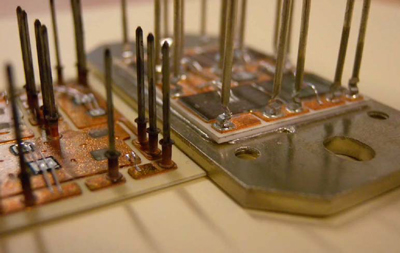
However, achieving applications success with compliant press-fit interconnects requires a thorough understanding of the issues that impact current carrying capacity as well as the knowledge base to assure that your supplier has conducted proper testing and certification of their interconnects.
In the past, the maximum current carrying assumption was usually considered to be in the 3 to 4 amp range for 0.64mm pins and 8 to 12 amp range for 0.80mm pins. Today, after many design refinements and extensive testing, compliant eye-of-the-needle interconnects have demonstrated reliable high-current capacities of 20 to 30 amps and more.
Test results across a range of temperatures and a variety of alloys, also demonstrate the capability to maintain reliable and predicable current carrying performance curves across a range of operating temperatures including 125ºC to 150ºC and above.
The current capacity testing process should be based upon generally accepted industry specifications and test procedures, such as IEC 60512-5-2. Measurements should be performed within controlled environments using carefully managed temperature and current levels.
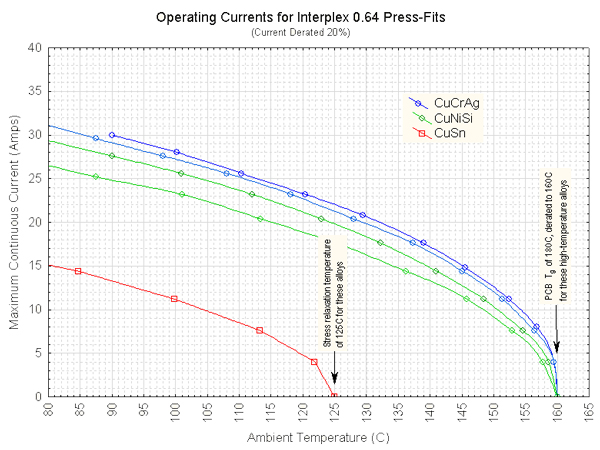
The availability of a full range of derated test curve data for a variety of alloys also enables product engineers to select the optimal press-fit zone interconnects to meet their specific application requirements. Depending on each application’s current-carrying requirements and/or operating temperatures, the designer can choose a press-fit zone component size and alloy that meets the exact specifications while also optimizing the overall product cost and manufacturability.
For more information and detailed test results, download the Interplex Tech Bulletin Series on Press-fit Current Carrying Capacity


