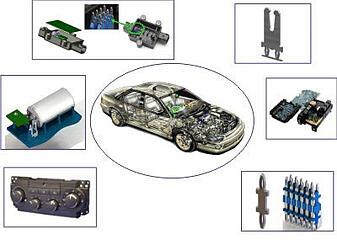
Interplex Junction - The Place to Connect

Reel-to-Reel Chemical Etching can deliver ultra-close tolerances

Posted by Chemical Etching Team

Jul 20, 2015 10:52:00 AM

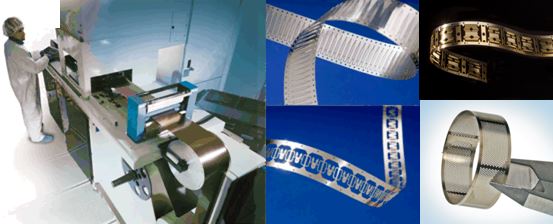
Chemical etching of metal parts is a photo-chemical metal conversion process that creates burr-free components with complex features for intricate metal designs and shapes that would not be achievable with conventional stamping techniques.

Reel-to-reel chemical etching takes this process to the next level by producing highly-repeatable precision parts in continuous format that is ideal for high-volume production environments.  

This has made reel-to-reel chemical etching the preferred go-to process for many aerospace, medical and other high-precision applications that require very fine features and tolerances.

Metal-Etching-Process

Read More

Topics: chemical etching

Outsourcing Design-to-Production for Fast Time-to-Market and Low Cost

Posted by Interplex Nascal

May 7, 2015 4:13:00 PM

In today’s fast moving and highly competitive environments, time-to-market demands are shrinking even as the need to continually deliver new product designs is escalating. This makes it particularly difficult for design and production organizations to keep up with the changing demands while also keeping costs in line.

Many companies are finding creative ways to leverage outside partners who can provide complete design-to-production support for targeted subassemblies and modules. An important consideration is using a partner that can take your requirements from initial concept all the way into production and/or has the flexibility to provide any of the design, prototyping and assembly steps along the way.

Design-to-Production2

Read More

Topics: design-to-production

Meeting the challenges of medical device re-design

Posted by Interplex Medical Design Team

Apr 22, 2015 9:18:00 AM

In the medical industry, the pace of innovation and changing demands must be balanced against the need to derive optimal ROI from product development.

render_end_mech

From a product improvement standpoint, there are always ideas and opportunities for both small engineering changes and more extensive redesigns that could potentially make existing products better. However, there are not always resources available to conduct a proper analysis on ROI or to undertake designing the changes when deemed worthwhile.

Teaming with an experienced partner for feasibility assessments, design concepts and product improvements can cost-effectively augment internal resources and help extend the profitability of existing products.

Read More

Topics: medical devices

Busbar Design is Critical Backbone for Power Applications

Posted by Power Products Design Team

Mar 26, 2015 11:28:00 AM

Amid the continuing changes and evolution of module designs in the automotive, power, industrial, motor, and other markets, one thing remains true: busbars still form the backbone for conducting significant current levels within and between assemblies.

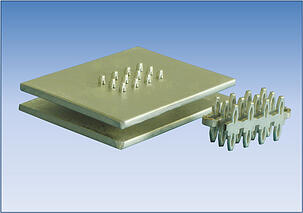
busbarsHowever, as power applications are becoming smaller, faster and more complex, the integration of busbar functionality is undergoing significant evolution as well. 

The keys to success are:

  • Minimizing contact resistance
  • Assuring lifecycle thermal performance
  • Reducing product size
  • Ensuring power efficiency
  • Streamlining assembly and lowering costs

Read More

Topics: power modules

Charged EV article: The Future of Integrated Inverter Modules

Posted by Automotive Design Team

Mar 17, 2015 9:00:00 PM

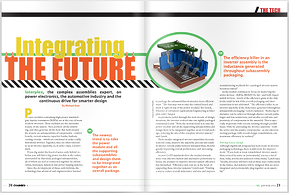
Charged EVs magazine published a great article in their newest issue on "The Future of Integrated Inverter Modules: Press-fit solderless interconnects and smarter design".  

Interplex-ChargedEVs-article

The article provides an excellent overview on the driving factors in the automotive industry that are radically altering the challenges facing design engineers tasked with creating next-gen inverter modules.

With efficiency and cost the keys to success, finding a way to reduce overall inductance and inverter size while improving manufacturing methods have become critical.

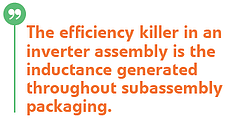
The author, Michael Kent, did extensive research on the factors impacting power efficiency and much of the article focuses on the detrimental impacts of inductance, which is the primary"efficiency killer".  

Interplex-PQ1

The article also drills down and explores how solderless press-fit interconnects and advanced packaging methods can dramatically reduce inductance problems while also making inverters easier to manufacture.

For more information, read the entire Charged EVs article here.


You might also find of interest these Tech Bulletins on related topics:


Read More

Topics: power modules

Trends Toward More Efficient Automotive Inverter Power Modules

Posted by Automotive Design Team

Feb 19, 2015 9:51:00 AM

The ongoing trends in electrification of automobiles, trucks and commercial transportation systems are driving a series of important changes in the way inverters and power modules are designed, manufactured and integrated with other systems in the vehicles.

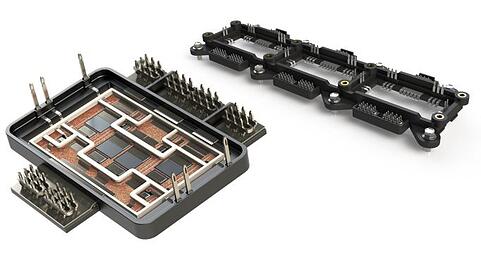
Typically, modern inverters are built around high-power insulated-gate bipolar transistors (IGBTs) that handle all of the electronic switching functions at the heart of the process. A number of subassemblies and components, such as control boards, busbars, current sensors, capacitor banks, cooling circuits, etc., surround the IGBT. When integrated together, all of these elements comprise the functional inverter stack.


Traditional interconnect methods in IGBT power module packaging, such as bolting and welding harness connections cannot keep up with today’s requirements because they are inefficient, cumbersome, and assembly-process intensive. They result in larger assemblies with longer current paths and higher overall inductance.

In contrast, the efficient design of IGBT inverters and power module integration by using pluggable, high-force, press-fit technology can significantly improve power efficiency, reduce the bill-of-material costs, decrease assembly complexity and shrink the overall physical size of the power assembly.

Read More

Topics: power modules, automotive

Adapting Press-Fit Technology for Harsh Environments

Posted by Press-Fit Team

Feb 12, 2015 10:20:00 AM

Press-Fit-overviewFor over 50 years a variety of Press-Fit connectors have been widely used in the telecom and industrial markets. The technology available for those markets works well in most controlled environment applications where mobility, vibration and harsh environmental conditions are not encountered.
The ongoing development of electronic systems for use in such applications as automotive and transportation systems and green power applications requires the units to operate under quite aggressive conditions and severe ambient environments. Over recent years, there have been several significant design upgrades and changes to past press-fit designs that were needed to move the technology to support these harsher environments.

Read More

Topics: Press-Fit compliant interconnects

Using LCP Based Pre-molded Leadframe Packages for RF and MEMS devices

Posted by Interplex Engineered Products team

Feb 5, 2015 10:05:00 AM

The Air Cavity Package (ACP) is a widely used option for RF products, hybrid circuit assemblies, as well as optical/photonic devices. Typical ACP’s have consisted of metal cans and ceramic leadless chip carriers (LCC). Custom ACP’s are also provided by machined metal housings and LTCC options.

However, over the past 10 - 15 years, the development of MEMS Sensors and LED devices has seen the use of thermoplastic pre-molded leadframe packages become the top choice for custom application specific housings. These products are now maturing and moving to “standard” package outlines where possible.

Liquid Crystal Polymers (LCP) are the choice for plastic body components and connectors, developed to suit temperatures of 300 degrees C and above. This means that packages made with such materials can withstand the typical reflow soldering processes used in high-volume system manufacturing.

Following are some key considerations for achieving success with LCP based packaging.

Read More

Topics: module design & manufacturing

Solder-Bearing Claw Design Puts Grip into Edge Clips

Posted by SBL Team

Jan 22, 2015 9:52:00 PM

In conventional soldering processes, the two metal components to be joined are first brought into position and mechanically held in place. Then flux and solder are applied to the conjoined parts, typically by a dipping process.

The biggest issue is the inability of the solder dipping process to consistently assure precise and complete coverage of the desired areas on the pad and contact, which can result in variances of solder joint quality and reliability. In addition, this multi-step soldering process adds cost, time and complexity to the production environment.SBL_Claw

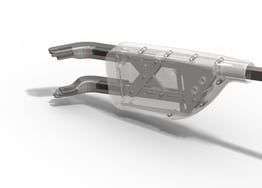
In contrast, by including a precise amount of preformed solder and flux on the contact surfaces of a claw shaped design, it is possible to derive 100 percent solderability and consistent repeatability.  This is particularly helpful for implementing edge clip connections.

Read More

Topics: Solder-bearing technology,

Current-carrying Capacity is Critical for Press-Fit Success

Posted by Press-Fit Team

Dec 17, 2014 8:57:00 AM

Driven by the explosive growth of automotive electrical systems and many other industries using inverter and converter based power modules, press-fit technologies have become the preferred alternative for delivering highly reliable, solderless interconnect solutions.

To support the growth and performance demands of new applications in the automotive, transportation, green energy and power module industries, solderless press-fit interconnects are being designed and tested to carry much higher current levels than was typically considered feasible in the past.

IGBT-power-module-charged-ev

Read More

Topics: Press-Fit compliant interconnects, power applications