Interplex Junction - The Place to Connect

Mechanical Force Analysis for Press-Fit Applications

Posted by Press-Fit Team

Dec 10, 2014 12:55:00 PM

Maintaining sufficient retention force is absolutely critical for the long-term operational integrity of any
press-fit interconnection. Therefore press-fit zone designs must be tested to meet the application's
minimum retention force requirements and operating environments using IEC-60352-5 requirements
as a baseline guide.

Testing both before and after multi-axis environmental stress includes but is not limited to: thermal shock, high/low temperature exposure, vibration, climatic cycling, temperature and humidity cycling and other similar test requirements. In addition, to assure a wide process control window for assembly and to minimize deformation to the plated-through hole, it is important that press-fit zone designs conform to maximum insertion force parameters.

Read More

Topics: Press-Fit compliant interconnects

Evaluation Checklist for Press-Fit Applications

Posted by Press-Fit Team

Dec 3, 2014 1:15:00 PM

press-fit-an-tnPress-fit technology has come a long way over recent years and has been adapted for use in a wide range of applications in diverse industry segments, including automotive, power modules, transportation, industrial equipment, communication systems, appliances, lighting, utilities, green energy, mobile devices, wearable electronics and many other consumer products.
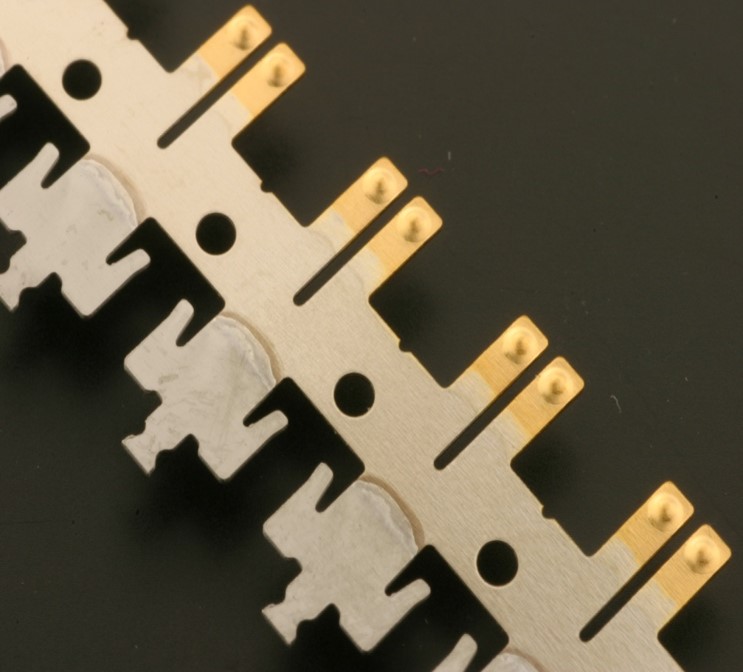
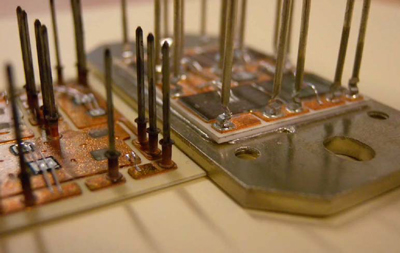
Performance testing has confirmed that solder-free Press-fit pins satisfy stringent operational requirements, including qualification to high temperatures, vibration, shock, and have excellent thermal expansion (CTE) characteristics for improved performance over extended product lifecycles.

However, as with any significant design program, it is vital to consider all of the relevant factors up front in order to get the best results out of your press-fit investments.  No new journey should be undertaken without a road map.  That's why we've created the Press-Fit Applications Evaluation Checklist.

In addition to this overview checklist, you can drill down into detail on virtually any related topic by visiting the full library of Interplex Press-Fit Tech Bulletins.

Read More

Topics: Press-Fit compliant interconnects

Using High-force Press-Fit to Enable Next-generation Power Modules

Posted by Press-Fit Team

Nov 20, 2014 5:28:46 PM

Growth in the electrification of automobiles, transportation systems and green-power applications is
driving a whole new set of challenges in the design and packaging of power conversion and
power management devices.  Reducing size and improving power efficiency are critical factors for success.

PowerModuleWithPressFit

Interconnecting sub-assemblies and elements within the power module requires a much more integrated approach than traditional bolt-on methodologies. With new chip-level power devices offering much better performance and efficiency, conventional interconnect methods also need a makeover to ensure that chip-level performance improvements carry through to the module level as well.

High-force, high-power press-fit technologies offer an excellent method for both enhancing power efficiency and streamlining of assembly processes.

Read More

Topics: power modules

Understanding and Analyzing Contact Resistance for Press-Fit Interfaces

Posted by Press-Fit Team

Nov 13, 2014 5:58:00 PM

The following three primary requirements must be addressed for verification of press-fit zone designs:

  • Plated Through Hole integrity (cross-section analysis)
  • Mechanical Forces (insertion & retention forces)
  • Contact Resistance (electrical measurement)

Before considering the use of any press-fit zone design, it is critical to know that it has been through and has passed a comprehensive environmental test program based on IEC-60352-5 requirements.

Maintaining contact resistance within specified parameters is a critical performance factor for the success of any press-fit application. Therefore all press-fit zone designs must be tested to meet the specific application's contact resistance requirements within the targeted operating environments.

Read More

Topics: Press-Fit compliant interconnects

Reel-to-Reel Plating Design for Manufacturing (DFM) Best Practices

Posted by Interplex Engineered Products team

Nov 6, 2014 1:10:22 PM

One of the biggest mistakes that companies can make is getting too far down the product design path before involving people with expertise in plating processes and alternatives.stripeplating2

Best practices in Design for Manufacturing call for early consultations with all of the key manufacturing participants to assure that production process choices reflect both the product specifications and the need for optimal production efficiency. 

Early involvement of plating experts assures manufacturability and holds down costs – both by minimizing the amount of precious metal in each product and streamlining production sequence to avoid unnecessary steps.

In many cases, making the relatively small investment at the beginning of the design process to choose the optimal reel-to-reel plating methodology can yield huge cost savings over the lifecycle of a product.

Read More

Topics: reel-to-reel plating

Current Capacity is a Critical Factor for Press-Fit Interconnects

Posted by Press-Fit Team

Oct 22, 2014 11:27:00 AM

Driven by the explosive growth in electrification of automotive systems, commercial transporation, green-power initiatives and many other industries using inverter and converter based power modules, press-fit technologies have become the preferred alternative for delivering highly reliable, solderless interconnect solutions.

pressfit-powerboard

However, achieving applications success with compliant press-fit interconnects requires a thorough understanding of the issues that impact current carrying capacity as well as the knowledge base to assure that your supplier has conducted proper testing and certification of their interconnects.

Read More

Topics: Press-Fit compliant interconnects

Etched Metal Filter Screens Combine High Strength and Close Tolerances

Posted by Etch Logic

Oct 15, 2014 5:46:00 PM

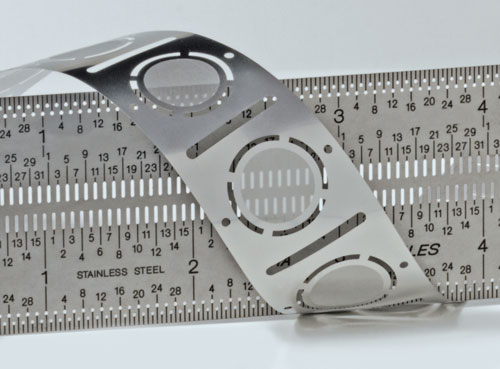
Fluid filtration and control systems are becoming more complex and are a critical element for many of today's advanced automotive, aerospace, medical and consumer applications.  The flow rates and pressure levels of a variety of different liquids are key factors for actuating or controlling processes within these systems, such as automotive valve actuation based on oil pressure levels.  Fluid filtration is also an important process for removing fine particulates from systems to avoid damage to sensitive components such as pumps, valves and motors.

When the application requirements need both high strength and close tolerances, with a high level of part repeatability, the only real solution is to use a well-controlled reel-to-reel chemical etching process for creating the metal filtration parts.

screen-and-rule2

Read More

Topics: chemical etching

Best Practices for Suppliers of Compliant Press-Fit Interconnects

Posted by Press-Fit Team

Oct 8, 2014 2:21:00 PM

An expanding range of industries is already relying on solder-free Press Fit technology as a key linchpin in their electronics assembly strategies.  

Because so many companies now depend on press-fit, it has become critically important for suppliers of compliant interconnects to provide in-depth testing, documentation, applications-support, and stringently controlled manufacturing processes.

Press-Fit-overview

Read More

Open Tooling saves time and cost on Press-fit, RF Shields and Antennas

Posted by Interplex Sunbelt

Oct 2, 2014 3:42:00 PM

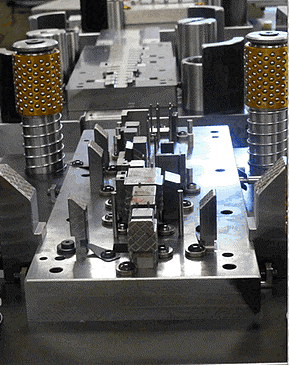
Precision metal stamping offers a high degree of design flexibility for defining and implementing small features with tight tolerances and unique configurations,  Custom applications are very well served by the adaptability of precision stamping with tooling that is tailored to the exact requirements of each application.

However, sometimes it pays to not be totally unique with the tooling approach.  The use of "Open Tooling" for creating stampings that share some basic characteristics can offer excellent opportunities for both reducing the cost of the tooling and improving the time to market.  opentooling

In fact, our experience has shown that using this approach for press-fit, RF shielding and antenna components can cut the tooling cost by as much as 50 percent and reduce the lead time by 60 percent or more.

Read More

Topics: precision metal stamping, Open Tooling

Enabling Next-Generation Intelligent Automobiles

Posted by Automotive Design Team

Sep 3, 2014 8:29:00 AM

The evolution of electronically controlled automotive features already encompasses a variety of functions such as GPS navigation systems, anti-lock brakes, vehicle stability control, hybrid drivetrains, and tire pressure monitors. 

This on-going transformation of automotive technology has now shifted into a higher gear with the development of autonomous driverless cars that include car-to-car communication, infrastructure information sharing, automatic parking and more.Intelligent-Automobiles

The spread of these electronic capabilities and their importance for safety and core automotive functionality has raised the bar with regard to reliability of all elements that make up and interconnect the underlying systems.

Read More

Topics: RF shields, sensors, Press-Fit compliant interconnects, automotive