Interplex Junction - The Place to Connect

Meeting the challenges of medical device re-design

Posted by Interplex Medical Design Team

Apr 22, 2015 9:18:00 AM

In the medical industry, the pace of innovation and changing demands must be balanced against the need to derive optimal ROI from product development.
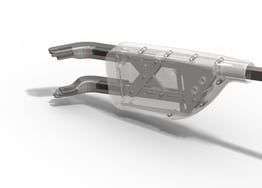
render_end_mech

From a product improvement standpoint, there are always ideas and opportunities for both small engineering changes and more extensive redesigns that could potentially make existing products better. However, there are not always resources available to conduct a proper analysis on ROI or to undertake designing the changes when deemed worthwhile.

Teaming with an experienced partner for feasibility assessments, design concepts and product improvements can cost-effectively augment internal resources and help extend the profitability of existing products.

Read More

Topics: medical devices

Creating Smart-Catheters Requires Smart-Design Techniques

Posted by Interplex Medical Design Team

Jun 12, 2014 1:13:10 PM

The capabilities of catheters used in the medical industry have been steadily evolving over recent decades but we are now seeing a giant leap forward with the emerging trend of new-generation Smart-Catheters.

Smart-Catheters provide more than just a one-way conduit by incorporating two-way feedback and control mechanisms, such as sending and receiving signals between the proximal and distal ends, which enables applications to use the distal-end information to perform additional functions that are guided in real-time by the two-way feedback loops or the ability to provide energy at the distal tip for selected ablation.

smartcatheterassortment

Read More

Topics: medical devices, Smart Catheters

Precision Engineering Challenge: Machining Orthopedic Surgical Devices

Posted by Interplex Precision Machining

Feb 6, 2014 3:55:00 PM

Creating machined products for the orthopedic surgical sector is one of the most demanding challenges that an engineer can tackle.  Products such as hip and knee surgical devices, spinal implant instrumentation, bone drills, bone reamers, tubular implant guides, jigs and orthopedic trial devices require the highest level of precision and machining accuracy.

Suppliers not only need to be responsive to customers' tight specifications, assembly and rapid-prototyping needs, they also must meet high-quality standards such as FDA-registration, ISO 9001 and ISO 13485.

InterplexPrecisionEngineering

Surgical device designers need to work with machining and engineering partners that can provide the full spectrum of materials, processes and quality procedures required to deliver even the most complex parts, on-time, on-budget and on-target.

Read More

Topics: medical devices, precision machining