Interplex Junction - The Place to Connect

Cold Forging Improves Production Efficiency for Drivetrain Components

Posted by Cold Forging Team

Sep 23, 2017 10:53:29 AM

Cold Forging is an "impact forming" process that deforms a billet of raw material plastically, under high compressive force, between a punch and a die using a Horizontal or Vertical Cold Forging press. 

Cold Forging efficiently forms all the existing material into the desired shape thereby maximizing material utilization; whereas Volume-In (billet) = Volume-Out (product). It also greatly increases production throughput rates compared to other manufacturing methods - this can be over 100 times faster in some instances.

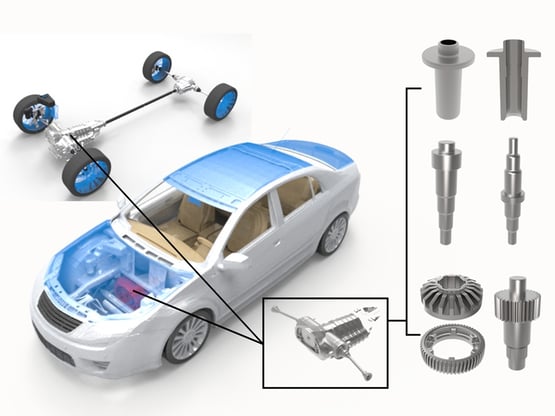
Drivetrain components must endure very high forces (torque, coupling, internal pressures, etc.) and handle instantaneous changes in force over the lifetime of the vehicle. Also, the ever-increasing complexity of the drivetrain component design, is creating new manufacturing challenges.

For creating automotive drivetrain components, Cold Forging offers the following advantages:

  • Improved Strength and Component Integrity
  • Higher Material Utilization Rates
  • Cost-Efficient High-Volume Production

This new Tech Bulletin details the advantages that Cold Forging provides for makers of various critical high-strength components used throughout automotive drivetrains. 

Click here to download the Tech Bulletin.
 

drivetrain.jpg

Read More

Topics: automotive, cold forging

Visit Interplex at Electric & Hybrid Tech Show

Posted by Power Products Design Team

Aug 27, 2015 10:14:00 AM

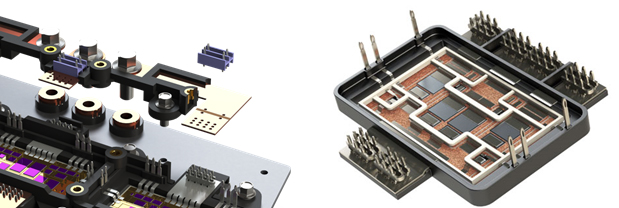
Visit Interplex at  the Electric & Hybrid Tech Expo in Novi, Michigan, September 15-17, 2015 (Booth #929) to learn how Interplex's power module packaging solutions create high levels of inverter efficiency.

We leverage our knowledge of interconnect technology, especially our press-fit technology, to create application-specific power module interconnect solutions, power module integration systems and IGBT power module packaging solutions to meet the demanding needs of the electric and hybrid vehicle market.
 
Read More

Topics: module design & manufacturing, automotive, power applications

Trends Toward More Efficient Automotive Inverter Power Modules

Posted by Automotive Design Team

Feb 19, 2015 9:51:00 AM

The ongoing trends in electrification of automobiles, trucks and commercial transportation systems are driving a series of important changes in the way inverters and power modules are designed, manufactured and integrated with other systems in the vehicles.

Typically, modern inverters are built around high-power insulated-gate bipolar transistors (IGBTs) that handle all of the electronic switching functions at the heart of the process. A number of subassemblies and components, such as control boards, busbars, current sensors, capacitor banks, cooling circuits, etc., surround the IGBT. When integrated together, all of these elements comprise the functional inverter stack.


Traditional interconnect methods in IGBT power module packaging, such as bolting and welding harness connections cannot keep up with today’s requirements because they are inefficient, cumbersome, and assembly-process intensive. They result in larger assemblies with longer current paths and higher overall inductance.

In contrast, the efficient design of IGBT inverters and power module integration by using pluggable, high-force, press-fit technology can significantly improve power efficiency, reduce the bill-of-material costs, decrease assembly complexity and shrink the overall physical size of the power assembly.

Read More

Topics: power modules, automotive

Enabling Next-Generation Intelligent Automobiles

Posted by Automotive Design Team

Sep 3, 2014 8:29:00 AM

The evolution of electronically controlled automotive features already encompasses a variety of functions such as GPS navigation systems, anti-lock brakes, vehicle stability control, hybrid drivetrains, and tire pressure monitors. 

This on-going transformation of automotive technology has now shifted into a higher gear with the development of autonomous driverless cars that include car-to-car communication, infrastructure information sharing, automatic parking and more.Intelligent-Automobiles

The spread of these electronic capabilities and their importance for safety and core automotive functionality has raised the bar with regard to reliability of all elements that make up and interconnect the underlying systems.

Read More

Topics: RF shields, sensors, Press-Fit compliant interconnects, automotive