
Cold Forging is an "impact forming" process that deforms a billet of raw material plastically, under high compressive force, between a punch and a die using a Horizontal or Vertical Cold Forging press.
Cold Forging efficiently forms all the existing material into the desired shape thereby maximizing material utilization; whereas Volume-In (billet) = Volume-Out (product). It also greatly increases production throughput rates compared to other manufacturing methods - this can be over 100 times faster in some instances.
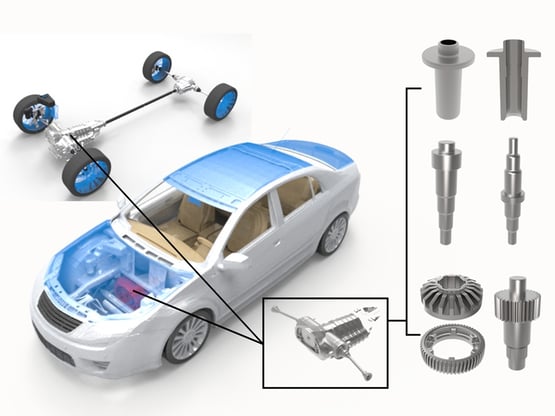
Drivetrain components must endure very high forces (torque, coupling, internal pressures, etc.) and handle instantaneous changes in force over the lifetime of the vehicle. Also, the ever-increasing complexity of the drivetrain component design, is creating new manufacturing challenges.
For creating automotive drivetrain components, Cold Forging offers the following advantages:
- Improved Strength and Component Integrity
- Higher Material Utilization Rates
- Cost-Efficient High-Volume Production
This new Tech Bulletin details the advantages that Cold Forging provides for makers of various critical high-strength components used throughout automotive drivetrains.
Click here to download the Tech Bulletin.
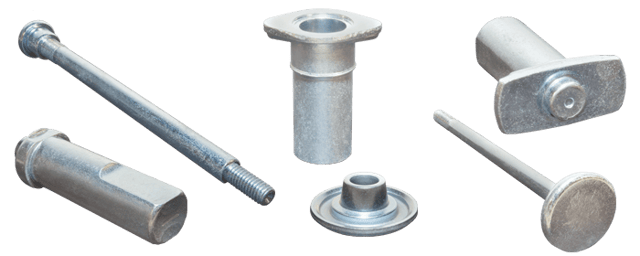
 Cold forging is basically an “impact forming” process that deforms a piece of raw material plastically, under high compressive force, between a punch and a die using suitable equipment such as a machine press.


