
Insert molding is an integrated process in which thermoplastic injection encapsulates a part, often a metal stamping, to create a discrete component that combines structural elements and environmental protection with specific embedded interconnect functionality.
There are several applications that naturally benefit from insert molding. These include electronic modules, sensors and medical devices in which there is an internal electronic circuit or other part that has to interface with the outside world.
The key challenge is to make the packaging watertight and structurally robust to protect the internal circuitry from damage, while simultaneously providing electrically reliable connections to the outside circuitry.
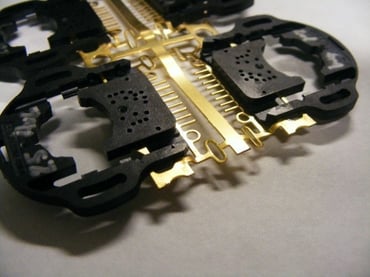
A primary reason that insert molding is employed to create packaged modules is the elimination of leak-paths that can potentially allow moisture to invade the device and damage the internal circuitry. Conventional post-insertion assembly processes, where the molded part is formed first and then interconnects are inserted into the finished package, have a higher likelihood of leakage because the insertion process cannot achieve a perfectly tight fit between the plastic and metal parts.
In many designs, it is also important to protect against potential damage from thermal expansion forces over the course of the product lifecycle. Certain modules, such as automotive modules and sensors must withstand repeated heating and cooling cycles over a wide range of temperatures.
Depending on the particular application, other key considerations include: Lid Sealing Methods, Atmospheric Pressure Venting and Insert Molding of Non-Electrical components.
Because electronic modules require a seamless integration of both the molded packaging and the internal circuitry, it is critical to take a holistic approach. Whether the metal parts inside the mold consist of a single stamping, multiple terminals, a lead-frame or complex specialized circuitry, it is critical for the insides to mesh perfectly with the outer packaging.
When handled properly, integrated insert molding offers not only in much better quality and higher yields than other methods, along with significant cost savings and reduction in production steps.
To learn more, download the Tech Bulletin on Integrating Insert Molding for Plastic Modules.


